PostelCertification

SNI

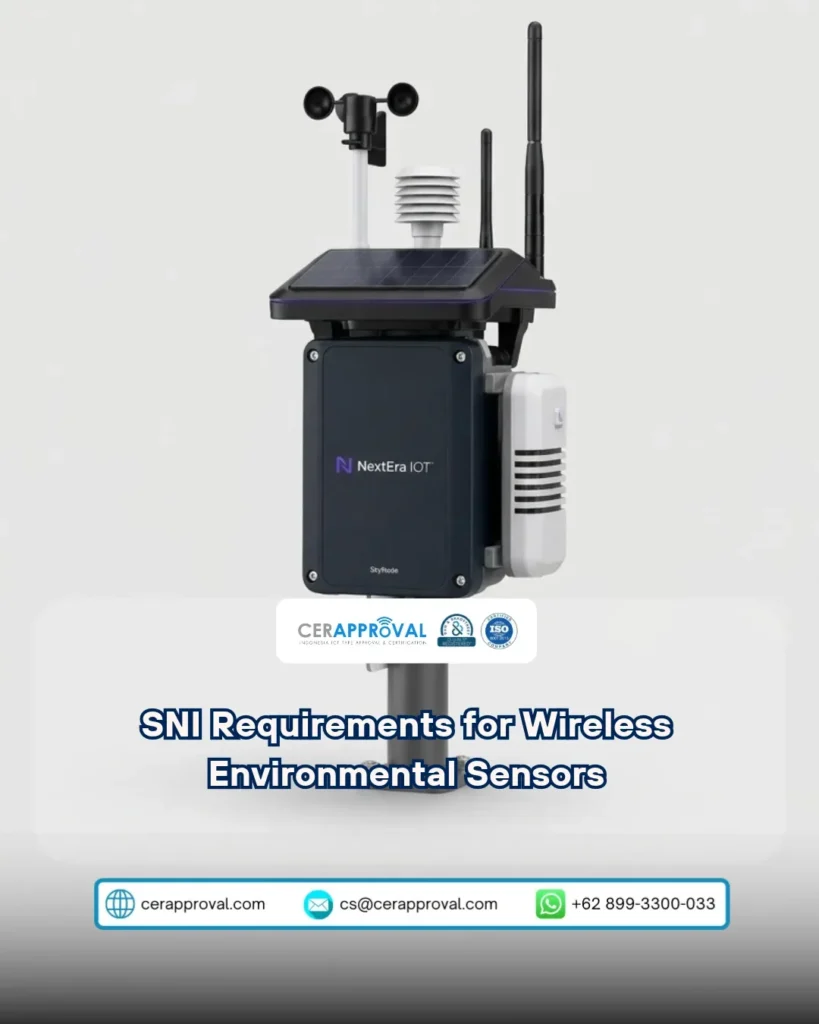
SNI Requirements for Wireless Environmental Sensors

SNI Requirements for Wireless Environmental Sensors are important for businesses that want to import or sell these products in Indonesia. These sensors measure temperature, humidity, air quality, and other conditions. They also send data through wireless networks. Therefore, companies should check the rules before selling their products. However, SNI and DJID certification have different purposes. SNI covers product standards. DJID covers radio and telecommunications rules. Depending on the product, businesses may need to meet both requirements. What Are Wireless Environmental Sensors? Wireless environmental sensors measure conditions around them. They collect data and send it to other devices without cables. For example, these sensors can measure: Temperature and humidity. Air quality and pollution. Carbon dioxide (CO2). Dust and small particles. Gas levels in factories. Conditions in farms and greenhouses. Many sensors use Wi-Fi, Bluetooth, Zigbee, or LoRa. These technologies send data to computers, mobile phones, or cloud platforms. As a result, users can monitor changes from different locations. These devices are also useful in factories, buildings, farms, and other work areas. SNI Requirements for Wireless Environmental Sensors in Indonesia SNI stands for Standar Nasional Indonesia, or Indonesian National Standard. It sets rules for product quality, safety, and performance. However, not every product needs SNI certification. Some standards are voluntary. Others are mandatory under government rules. First, companies must identify the correct product category. Then, they should check whether a mandatory SNI rule applies. If a mandatory rule exists, the product must meet that standard. The rules may cover safety, materials, performance, and testing. In addition, companies may choose voluntary SNI certification. This can help build customer trust and show that a product meets a recognized standard. Companies can learn more about SNI certification in Indonesia before preparing their documents. How to Use Wireless Environmental Sensors Wireless environmental sensors are easy to use. However, users must install them correctly to get good results. First, place the sensor in a suitable location. Choose an area that reflects the conditions you want to measure. For example, an air quality sensor needs enough airflow. Next, connect the device to a power source. Some sensors use batteries. Others need an external power supply. Then, connect the sensor to a wireless network. Depending on the model, it may use Wi-Fi, Bluetooth, Zigbee, or LoRa. After setup, the sensor starts collecting data. It sends the results to an app, computer, or cloud platform. Finally, users can check the readings and track changes over time. Regular care also helps keep the sensor accurate. For this reason, users should follow the manufacturer’s instructions. Do Wireless Environmental Sensors Need DJID Certification? Wireless environmental sensors may need DJID certification if they use radio features covered by Indonesian rules. For example, devices with Wi-Fi, Bluetooth, Zigbee, or other radio technologies may require technical evaluation. The rules depend on the radio technology, frequency, power, and antenna. Therefore, companies should check their product specifications before import or sale. SNI and DJID certification are not the same. SNI covers product standards. Meanwhile, DJID covers radio and telecommunications rules. As a result, one certificate does not replace the other. Companies should check the rules for each product. Read more about DJID certification requirements before starting the process. Documents Required for DJID Certification Companies should prepare the required documents before applying. These may include: Product technical specifications. User manual and datasheet. Product photos showing the brand and model. Radio frequency and power details. Test report from an accepted laboratory. Declaration of Conformity, if required. Company and applicant documents. In addition, all documents should show the same product information. The brand and model must match the product label, technical files, and test report. This is important because errors may delay the application. Therefore, companies should check every document before submission. For a full checklist, read our guide to documents required for DJID certification. How to Apply for DJID Certification The certification process usually follows five steps. 1. Product Review First, check the model, radio technology, frequency, and power. This helps identify the correct technical rules. 2. Document Preparation Next, prepare the technical and company documents. Review them carefully to avoid errors. 3. Product Testing Then, arrange testing at an accepted laboratory. The test checks whether the device meets the required standards. 4. Application Submission After testing, submit the test report and supporting documents through the required certification system. 5. Evaluation and Certificate Issuance Finally, DJID reviews the application. If the product meets the rules, the certificate can be issued. Companies should check the latest process before applying. This helps them prepare the right documents and avoid delays. Official Regulations and Technical References Companies should also review official rules before starting certification. For example, Indonesia’s technical standards for Short Range Devices cover several radio technologies. These include Bluetooth, NFC, RFID, and other short-range devices. Read Ministerial Decree No. 260 of 2024 on Short Range Device technical standards. In addition, Ministerial Regulation No. 2 of 2023 covers radio use under class licensing. Therefore, companies should check the correct rules for each wireless technology before applying. Get Help with SNI and DJID Certification Understanding SNI Requirements for Wireless Environmental Sensors can help businesses prepare before entering the Indonesian market. However, each product may have different rules. Therefore, companies should check the requirements before importing, distributing, or selling their devices. Cerapproval helps businesses review regulations, prepare documents, coordinate laboratory testing, and manage product certification. Our team can help you understand the rules and guide you through the process. Contact Cerapproval today for a free consultation. Let our team help you identify the certification requirements for your wireless environmental sensors in Indonesia. Call To Action Need Help with SNI or DJID Certification? Cerapproval helps businesses understand Indonesian product regulations, prepare certification documents, coordinate product testing, and manage certification applications. Contact our team today for a free consultation. Website: www.cerapproval.comEmail: gma@cerapproval.comWhatsApp: +62 899-3300-033
SNI

SNI Certification for Retro Vinyl Speakers in Indonesia: Requirements and DJID Process

Retro vinyl speakers combine classic style with modern sound features. They let users enjoy vinyl records and digital music through one device. Some models also support Bluetooth, USB, and AUX connections. However, businesses must check Indonesian rules before importing or selling these products. SNI Certification for Retro Vinyl Speakers is an important requirement to review. Importers and manufacturers must also check DJID certification if their products use Bluetooth or other wireless features. This guide explains how to use retro vinyl speakers and how to check their SNI and DJID requirements. It also covers the steps businesses must take before selling these products in Indonesia. What Are Retro Vinyl Speakers? Retro vinyl speakers are audio devices with a classic look and modern sound features. Most models combine a record player with built-in speakers. Depending on the model, they may have: Vinyl playback: Plays music from vinyl records. Bluetooth: Connects to phones, tablets, and laptops. USB: Plays supported digital music files. AUX: Connects to other audio devices with a cable. Built-in speakers: Plays music without extra speakers. However, each model may have a different design. Therefore, businesses should check the product details before starting the certification process. How to Use a Retro Vinyl Speaker Using a retro vinyl speaker is simple. First, place the device on a flat surface. Then, connect the power cable or charge its battery. For Vinyl Playback Place a compatible record on the turntable. Next, lift the tonearm and carefully place the stylus on the record. After that, adjust the volume to a comfortable level. For Bluetooth Playback Turn on Bluetooth mode. Then, open the Bluetooth settings on your phone or laptop. Select the speaker from the device list. Once connected, you can play music wirelessly. For USB and AUX Playback You can also use the USB or AUX input. Simply connect your device and select the correct input mode. Finally, turn off the speaker after use. Keep it away from water, dust, and high heat. These simple steps help protect the device and maintain its performance. SNI Certification for Retro Vinyl Speakers: Requirements Indonesia applies mandatory SNI rules to certain audio and video products. One key regulation is Minister of Industry Regulation No. 75 of 2024. This regulation covers standalone active speakers that are not part of another product. It also sets SNI IEC 62368-1:2014 as the required safety standard for products within its scope. However, a retro vinyl speaker with a built-in turntable may have a different product classification. Therefore, businesses should not assume that every model has the same SNI requirements. Before applying, check the following details: Product type and main function. Brand and model. Technical specifications. Power supply and electrical features. Applicable HS code. Whether the product falls under the mandatory SNI list. For this reason, a product review is an important first step. It helps businesses choose the correct certification route and avoid extra costs. You can also learn about Cerapproval’s SNI Certification Services in Indonesia for support with product checks, document preparation, and testing. How to Process SNI Certification for Retro Vinyl Speakers Once the product falls within the mandatory SNI scope, the business can start the certification process. Step 1: Product Identification First, identify the product type, brand, model, and technical details. Then, check the HS code and the relevant SNI rules. Step 2: Document Preparation Next, prepare the company and product documents. These may include business licenses, product photos, a datasheet, a user manual, and factory details. Step 3: Application to an LSPro After that, submit the application to an authorized Product Certification Body (LSPro). The LSPro will review the documents and confirm the required certification scheme. Step 4: Factory Audit and Product Sampling Next, the LSPro may arrange a factory audit and product sampling. The audit checks the factory’s quality system and production controls. Step 5: Product Testing Then, the selected samples go to a laboratory for testing. The laboratory checks the product against the relevant safety standard, including SNI IEC 62368-1:2014 when applicable. Step 6: Evaluation and Certificate Issuance Finally, the LSPro reviews the audit results and test report. If the product meets all requirements, the certification body can issue the SNI certificate. After that, the business must follow the applicable SNI marking and surveillance rules. DJID (Postel) Certification for Bluetooth Retro Vinyl Speakers SNI and DJID certification have different purposes. SNI focuses on product safety. Meanwhile, DJID covers technical rules for telecommunications and radio equipment. For example, some retro vinyl speakers have Bluetooth or Wi-Fi features. These functions use radio signals to connect with other devices. Therefore, businesses must check whether DJID certification applies. The requirements depend on the wireless function, frequency, and product specifications. Bluetooth devices must be checked against the relevant Short Range Device (SRD) rules. The DJID certification process generally includes these steps: Step 1: Technical Review First, check the Bluetooth or Wi-Fi features. Record the operating frequency and wireless module details. Step 2: Document Preparation Next, prepare the datasheet, user manual, product photos, company documents, and available test reports. Step 3: Testing or Document Evaluation Then, check the correct testing route. Some eligible products may use accepted international test reports. Other products may need local laboratory testing. Step 4: Application Submission After the technical documents are ready, submit the application through the applicable DJID certification system. Step 5: Technical Evaluation The authority reviews the application and supporting documents. If any information is missing, the applicant may need to provide more details. Step 6: Certificate Issuance Finally, the DJID certificate can be issued once the product meets the applicable requirements. For more information, visit Cerapproval’s DJID Certification Services. The team can help review technical documents, coordinate testing, and manage the application process. Why Choose Cerapproval for SNI and DJID Certification? Preparing product documents can be difficult for importers and manufacturers. Incorrect product data or missing documents can delay an application. Therefore, Cerapproval helps businesses manage their certification needs in Indonesia. Our services include: Product identification and regulatory checks. SNI and DJID document preparation.

K3L

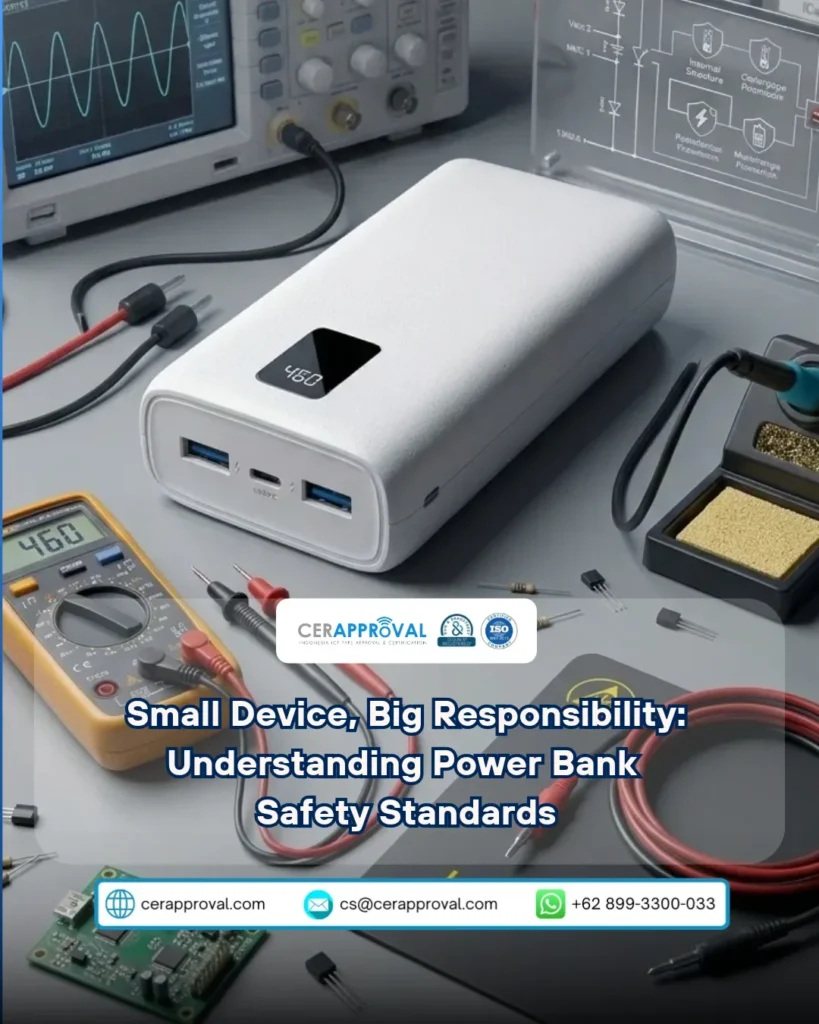
Small Device, Big Responsibility: Understanding Power Bank Safety Standards

Power Bank Safety Standards in Indonesia are important for manufacturers, importers, and distributors. Power banks are now common accessories for smartphones, tablets, and other electronic devices. They are small, easy to carry, and useful when people need extra power. However, power banks contain rechargeable lithium batteries. Poor battery quality can cause overheating, swelling, or even fire. Therefore, manufacturers must pay attention to battery safety and product quality. In addition, businesses must understand Indonesian product regulations before selling power banks. These rules may involve SNI standards, K3L registration, and Postel/DJID certification. This article explains power bank safety, proper usage, and the certification process in Indonesia. 1. What Are Power Banks and How Do They Work? A power bank is a portable device that stores electricity. It uses a rechargeable battery to charge other electronic devices. Most modern power banks use lithium-ion or lithium-polymer batteries. These batteries store a large amount of energy in a small space. A typical power bank has five main parts: Battery cells: Store electrical energy. Battery Management System (BMS): Controls battery charging and discharging. Input port: Receives power when users charge the power bank. Output port: Sends power to smartphones and other devices. Protection circuit: Helps prevent electrical problems. Moreover, some power banks offer fast charging and wireless charging. Others include LED displays and smart charging features. These features make power banks more useful. However, wireless functions may also create additional certification requirements. 2. Why Are Power Bank Safety Standards in Indonesia Important? Lithium batteries need proper protection. Without it, a battery may become unsafe during charging or normal use. One major risk is thermal runaway. This happens when a battery produces too much heat. As a result, the temperature can rise quickly and damage the battery. Several factors can cause battery problems: Using an unsuitable charger. Charging a damaged battery. Using poor-quality battery cells. Dropping or crushing the power bank. Leaving the device in a hot place. Using damaged charging cables. Therefore, manufacturers should follow suitable battery safety standards. These standards help improve product quality and reduce safety risks. In addition, proper safety testing helps businesses build customer trust. It also supports product compliance before market entry. 3. SNI Requirements for Power Bank Safety Standards in Indonesia Indonesia has a specific national standard for lithium-ion power banks. One important standard is SNI 8785:2019 – Lithium-Ion Power Bank: Part 1, General Safety Requirements. This standard covers general safety requirements for portable lithium-ion power banks. BSN lists this standard as active. Another related standard is SNI IEC 62133-2:2017. It covers safety requirements for portable rechargeable lithium battery cells and batteries. These standards provide technical guidance for battery safety and product quality. However, businesses must understand the difference between an active SNI standard and mandatory SNI certification. An active standard does not automatically mean that every power bank needs mandatory SNI certification. Therefore, importers and manufacturers should check the latest mandatory SNI regulations before selling their products in Indonesia. 4. How to Use a Power Bank Safely Proper use can reduce battery risks. It can also help power banks last longer. Here are six important safety tips. 1. Use the Right Charger First, use a charger and cable that match the manufacturer’s instructions. Avoid poor-quality charging accessories. 2. Avoid High Temperatures Next, keep your power bank away from direct sunlight. Do not leave it inside a hot car because high temperatures can damage the battery. 3. Check the Battery Condition Also, inspect your power bank regularly. Stop using it if you notice swelling, leakage, unusual smells, or physical damage. 4. Avoid Overloading Make sure your devices follow the power bank’s input and output limits. In addition, avoid using damaged cables. 5. Keep It Away from Water Water can damage electrical parts. Therefore, keep your power bank in a dry place. 6. Follow the User Manual Finally, read the product instructions before charging or storing the device. Follow the recommended safety steps from the manufacturer. These simple habits can help prevent battery accidents. 5. Does a Power Bank Need K3L Registration in Indonesia? K3L stands for Keamanan, Keselamatan, Kesehatan, dan Lingkungan Hidup. The Indonesian Ministry of Trade regulates K3L goods registration under Minister of Trade Regulation No. 33 of 2025. This regulation covers 42 categories of goods. These include 20 chemical-related categories and 22 electrical and electronic categories. However, not every electronic product automatically needs K3L registration. The requirement applies to products listed in Appendix III of the regulation. Both local and imported products must follow the rule when their product categories are included. Therefore, businesses must check their exact product type and classification before applying. For products covered by the regulation, the application may require: Self Declaration of Conformity. Laboratory test reports. Product brand and model information. Physical product photographs. Distributor and importer information. Furthermore, businesses submit new K3L registration applications through OSS. The Ministry of Trade provides an online registration process for eligible products. K3L registration is different from SNI and DJID certification. Each process has a separate purpose. 6. Does a Power Bank Need Postel/DJID Certification? Not all power banks need Postel/DJID certification. The requirement depends on the product’s technical features. For example, a standard wired power bank uses USB ports to transfer electricity. It does not automatically need DJID certification simply because it contains a battery. However, a wireless power bank uses Wireless Power Transmission (WPT) technology. This technology transfers electrical energy without a physical cable. Indonesia regulates WPT through Ministerial Decision No. 46 of 2025. This regulation sets radio frequency and technical requirements for wireless power transmission devices. In addition, the official DJID database contains examples of certified wireless power banks. This confirms that certain wireless power bank products require telecommunications equipment certification. sertifikasi.postel.go.id Therefore, businesses should check the wireless functions and technical specifications before importing these products. 7. How to Obtain Postel/DJID Certification for Wireless Power Banks Businesses that import or distribute regulated wireless power banks must follow the applicable DJID certification process. The general process includes six steps. Step 1: Identify the

K3L

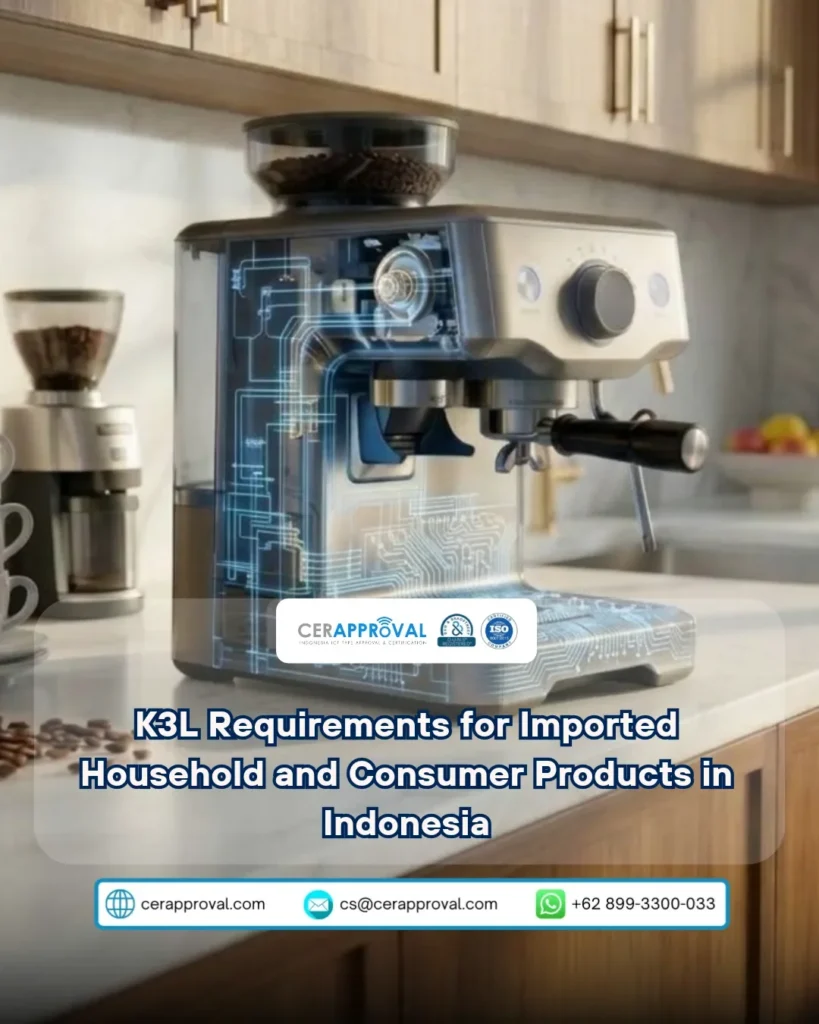
K3L Requirements for Imported Household and Consumer Products in Indonesia

K3L Requirements for Imported Products in Indonesia are important for businesses that import and sell household goods. Before selling these products, importers must check the rules that apply to them. They must also review product safety, health, and environmental risks. K3L stands for Keamanan, Keselamatan, Kesehatan, dan Lingkungan Hidup. These rules help protect consumers from unsafe products. They also support the safe use of goods in the Indonesian market. However, not every imported product needs K3L registration. The rules apply to certain goods listed by the Ministry of Trade. Therefore, importers should check their product type before starting the process. What Are K3L Requirements for Imported Products in Indonesia? K3L registration is a government process for certain goods sold in Indonesia. It helps the government track products and protect consumers from possible harm. The rules cover selected products that may pose safety, health, or environmental risks. Under Minister of Trade Regulation No. 33 of 2025, the list includes 42 types of goods. These goods fall into two main groups: 20 types of goods that contain hazardous chemicals. 22 types of electrical and electronic goods. The rules apply to both local products and imported products listed in the regulation. Therefore, importers must check the product list before selling their goods. For example, some household appliances and consumer electronics may fall under the K3L rules. However, the product category and technical details still matter. You can read more on the Ministry of Trade website. Which Imported Products Need K3L Registration? Not all household and consumer products need K3L registration. The requirement depends on the official product list. Importers should check these details first: Product name and category. Brand and model. Main materials and chemical content. Product use and function. Whether the product appears in the current K3L list. For example, certain electrical appliances may fall under the rules. Some goods that contain hazardous chemicals may also need registration. Do not assume that every electronic product needs K3L registration. Instead, compare the product with the list in the current regulation. This check can help you avoid delays and extra costs. What Documents Are Needed for K3L Registration? Importers should prepare the required documents before submitting an application. Clear and complete files can help prevent errors. The general requirements include: Self-declaration of conformity: A statement that the product meets the applicable requirements. Laboratory test report: The report must show the product brand and type or model. It must also be issued no more than six months before the application date. Product photos: Provide clear photos of the actual product. Distribution list: Include the names and addresses of distributors, agents, wholesalers, and retailers. Some product types may need extra documents. For example, certain textile goods may need proof of K3L registration for their raw materials and other supporting statements. Therefore, check the latest document list before applying. Also, make sure the brand and model match across all files. How to Apply for K3L Registration in Indonesia The application process depends on the type of request. New registration and changes to an existing registration use different online systems. Follow these steps to prepare your application. Step 1: Check the Product List First, compare your product with the goods listed under the current K3L regulation. Check its category, brand, model, and intended use. Step 2: Prepare the Required Documents Next, collect the self-declaration, test report, product photos, and distribution details. Check the issue date of the test report as well. Step 3: Submit a New Registration Through OSS For a new K3L registration, submit the application online through the OSS system. Make sure the information is correct before you submit the form. Incomplete files may delay the review. Step 4: Follow Up on the Application After submission, monitor the application status. Respond if the reviewing team asks for more information or corrections. Step 5: Complete the Registration Process According to the Ministry of Trade, a complete and correct application can receive its registration within a maximum of three working days. For changes or re-registration, use the INATRADE system. Both systems use the OSS single sign-on access. Step 6: Display the K3L Registration Number After approval, place the K3L registration number on the product or its packaging. The number must be easy to see and read. It must also stay clear and not wear off easily. For official guidance, visit the Ministry of Trade K3L information page. How Should Imported Household Products Be Used? Product safety does not end with registration. Consumers also need clear instructions to use each product safely. For electrical appliances, users should follow the product manual. They should check the voltage and power rating before use. They should also keep the product away from water when the manual requires it. For chemical products, users should read the label first. They must follow the safety warnings and storage instructions. They should also keep hazardous products away from children. Importers should review product labels before selling their goods. Where required, labels should use clear Bahasa Indonesia. They should explain safe use and show the right warnings. Clear instructions help consumers understand how to use a product. They can also reduce the risk of accidents. Does Your Product Need Postel/DJID Certification? K3L registration and Postel/DJID certification are different. Each process has its own rules and purpose. K3L registration applies to goods listed under the Ministry of Trade rules. Postel/DJID certification applies to telecommunications equipment covered by the relevant regulations. For example, some products with Bluetooth, Wi-Fi, or cellular features may need DJID certification. However, the exact requirement depends on the product and its technical features. A product may need more than one type of approval. Therefore, importers should check each rule that applies to their goods. A K3L registration number does not replace Postel/DJID certification. Likewise, DJID certification does not replace K3L registration. To learn more, visit the official DJID certification portal. Why Choose Cerapproval for K3L Registration? Import rules can be difficult to follow. Some products may also need more than one approval. As a

TKDN

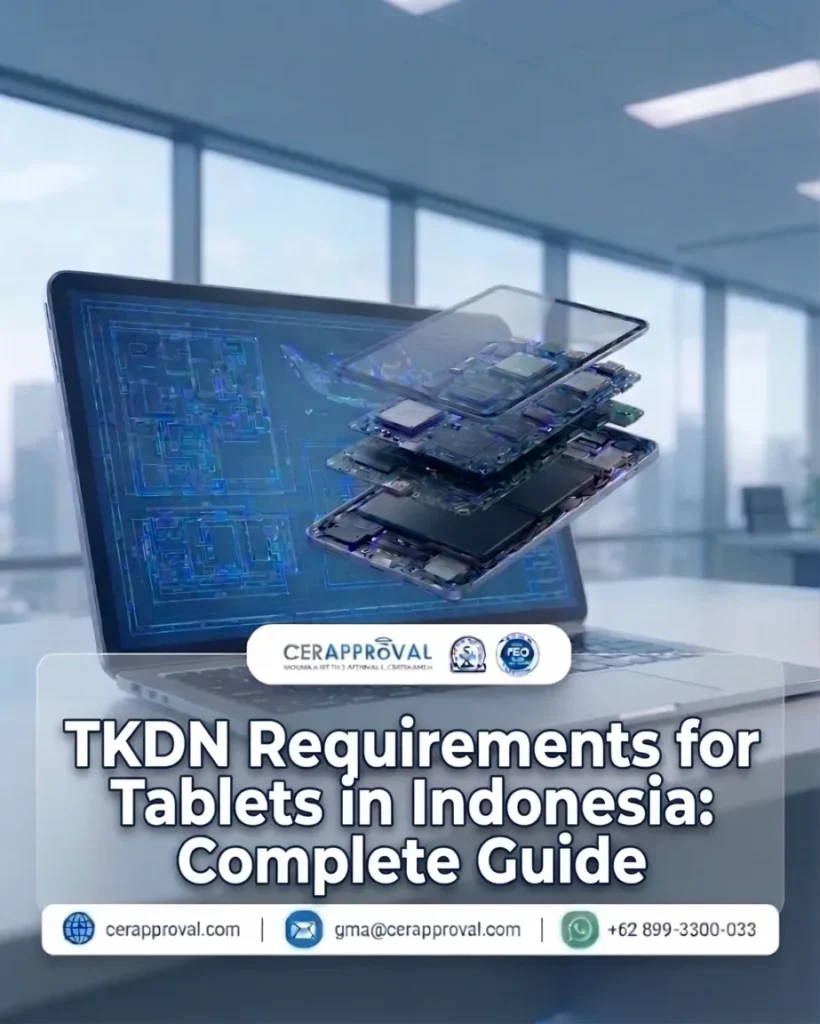
TKDN Requirements for Tablets in Indonesia: Complete Guide

TKDN requirements for tablets in Indonesia are important for businesses that sell tablets. Before selling a tablet, check the rules. You should also check Postel/DJID certification. Both are important, but they serve different purposes. So, check both before you enter the Indonesian market. What Are TKDN Requirements for Tablets in Indonesia? TKDN stands for Tingkat Komponen Dalam Negeri. It measures local content in a product under Indonesian rules. For example, the review may cover local parts, labor, and production. However, the rules can vary by product. Not every tablet needs TKDN certification. So, check the latest rules before you apply. You can find more details on the Ministry of Industry website. What Documents Do You Need? First, check your tablet model and manufacturer. Then, find out which documents you need. You may need these documents: Product details and parts lists. Details of the production process. Cost records and supplier data. Company licenses and other proof. Next, check each file. Make sure all details match. This can help prevent errors. It may also help you avoid delays. Does Your Tablet Need Postel/DJID Certification? Many tablets use Wi-Fi, Bluetooth, or mobile networks. Because of these features, some tablets may need Postel/DJID certification in Indonesia. However, the rules depend on the device. So, check the rules for your tablet model before you apply. TKDN and Postel/DJID certification are different. TKDN covers local content. In contrast, Postel/DJID certification covers telecom equipment. Meeting one rule does not mean you meet the other. For more details, visit the official DJID certification portal. How to Apply for Postel/DJID Certification Follow these steps to prepare your application. Identify your tablet. Check its brand, model, maker, and wireless features. Check the rules. Find out which rules apply to your device. Prepare your files. Gather the required product details and company records. Check testing needs. Find out if lab tests or test reports are needed. Submit your application. Follow the official process once your files are ready. Complete the review. Reply to any request for more information. These steps can help you prepare. Also, check your files before you apply. This may help reduce errors and delays. Why Choose Cerapproval? Product rules can be hard to follow. Missing files can also slow down the process. Cerapproval helps businesses understand product certification in Indonesia. We can guide you through document checks and the next steps. As a result, you can better understand what your product needs. You can also prepare your application with more confidence. Learn more about our Cerapproval certification services. Conclusion TKDN requirements for tablets in Indonesia depend on the product and the rules that apply. Some tablets may also need Postel/DJID certification because they use wireless features. So, check your product before you import or sell it in Indonesia. If you need help, Cerapproval can guide you through the process. Call to Action Want your device certified quickly and accurately? Contact Cerapproval today for a free consultation. We can help you understand the rules and plan your next steps. For more details, visit the official DJID certification portal. Contact Us Today: Website: www.cerapproval.comEmail: gma@cerapproval.comWhatsApp: +62 899-3300-033
Flag Counter