SNI

SNI

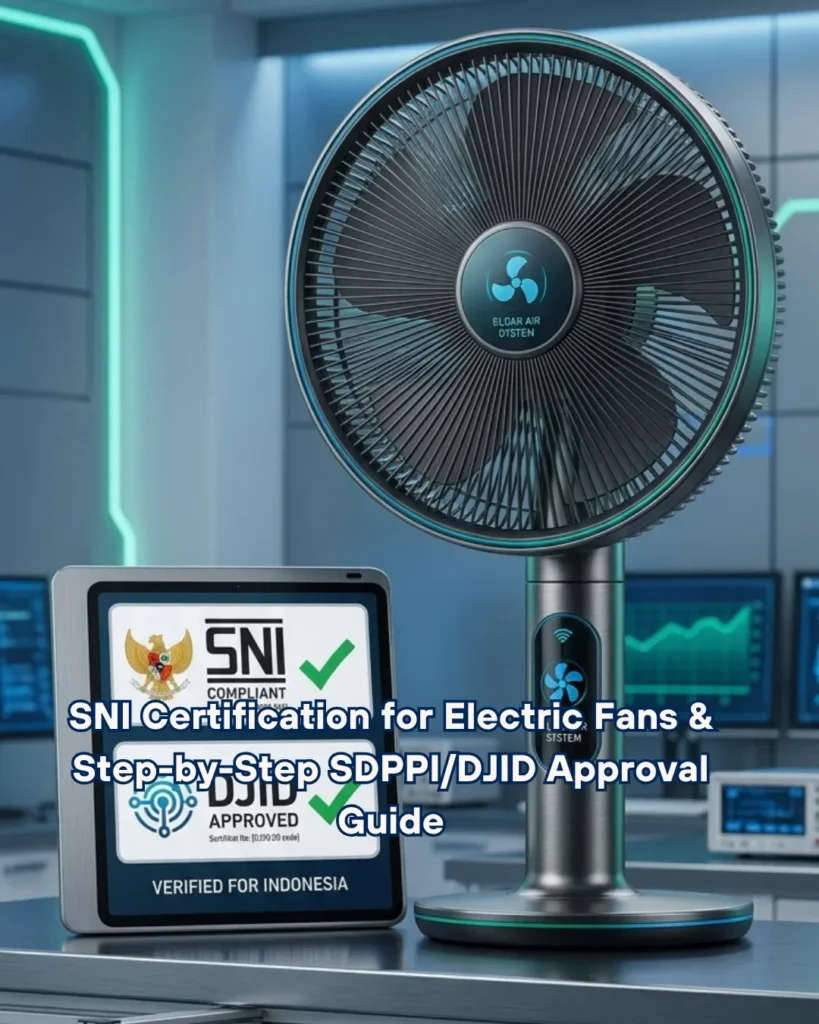
SNI Certification for Electric Fans & Step-by-Step SDPPI/DJID Approval Guide

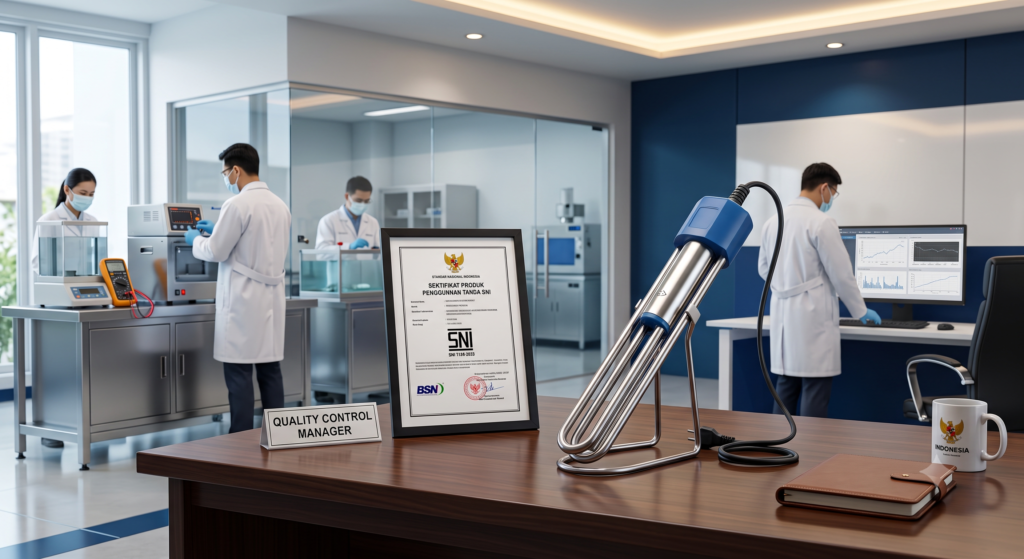
The market for home appliances and consumer electronics in Indonesia presents immense commercial opportunities. Among the most widely imported and manufactured products are electric fans and smart wireless devices. However, bringing these products to the Indonesian market requires strict adherence to national compliance rules. Conventional electric fans must comply with Mandatory SNI (Standar Nasional Indonesia) regulations, while smart fans equipped with Wi-Fi, Bluetooth, or RF remote controllers must also obtain SDPPI/DJID Certification. 1. Mandatory SNI Certification Electric Fan and SDPPI DJID Process (SNI IEC 60879) Electric fans sold in Indonesia are bound by mandatory safety standards enforced by the Ministry of Industry and Ministry of Energy and Mineral Resources (ESDM). The aim is to ensure consumer safety against electrical shocks, mechanical failure, and fire hazards. Key Regulatory Standards for Electric Fans: SNI IEC 60335-2-80 / SNI 7609: Specific safety requirements for electric fans (table fans, wall fans, pedestal fans, ceiling fans, and duct fans). SNI 7859 / SNI IEC 60335-1: General electrical safety requirements for household appliances. SNI IEC 60879: Performance and energy efficiency standards (SKEM rating label). Workflow to Obtain SNI Certification: LSPro Application: Submit an application to a KAN-accredited Product Certification Body (LSPro). Factory Audit: Quality Management System (ISO 9001) evaluation at the manufacturing facility. Sample Testing: Laboratory testing covering insulation resistance, mechanical stability, thermal endurance, and blade safety.Scribd SPPT SNI & NPB Registration: Upon passing tests and audits, the SPPT SNI Certificate is issued, followed by registering a Product Registration Number (NPB) with the Ministry of Trade. 2. How to Obtain SDPPI / DJID Certification If an electric fan incorporates smart features—such as IoT app controls, Bluetooth connectivity, or RF remote operations—it is categorized as a Radio Frequency (RF) telecommunications device. It must receive Type Approval from the Directorate General of Digital Infrastructure (DJID) formerly Ditjen SDPPI under Komdigi. Step-by-Step SDPPI / DJID Process: Dossier & Document Preparation: Prepare technical datasheets, RF block diagrams, operational frequency specs (2.4 GHz/5 GHz Wi-Fi, Bluetooth, etc.). Manufacturer ISO 9001 certificate and local importer legal credentials (NIB).actanindya.biz RF & EMC Testing: Conduct testing at an accredited local test lab in Indonesia or utilize valid foreign lab test reports under Komdigi MRA schemes. Online Portal Application: Submit test reports and administrative documents via the official DJID digital certification system. SP2 Government Fee Settlement: Once evaluated, pay the non-tax government fee (PNBP) as instructed by the SP2 invoice. Certificate Issuance & Mandatory Labeling: DJID issues the official Type Approval Certificate. Importers must affix the official DJID compliance mark and QR code onto product units and retail packaging. Streamline Your Market Entry with Cerapproval Handling dual certifications (SNI and SDPPI/DJID) requires deep regulatory expertise and coordination with multiple government bodies. Cerapproval provides comprehensive regulatory compliance services, handling testing coordination, factory audits, and government filings for global brands entering Indonesia. Need assistance with SNI or SDPPI/DJID compliance in Indonesia? > Streamline your product entry into the Indonesian market! Partner with Cerapproval today for professional SNI testing and seamless SDPPI/DJID certification. Contact Cerapproval today for a free consultation and start your certification process! Get a free consultation for your certification. Download the complete guide to the KOMDIGI certification process. Schedule a meeting with the Cerapproval expert team today! Contact Us Today:🌐 www.cerapproval.comπŸ“§ gma@cerapproval.comπŸ“± WhatsApp: +62 899‑3300‑033

SNI

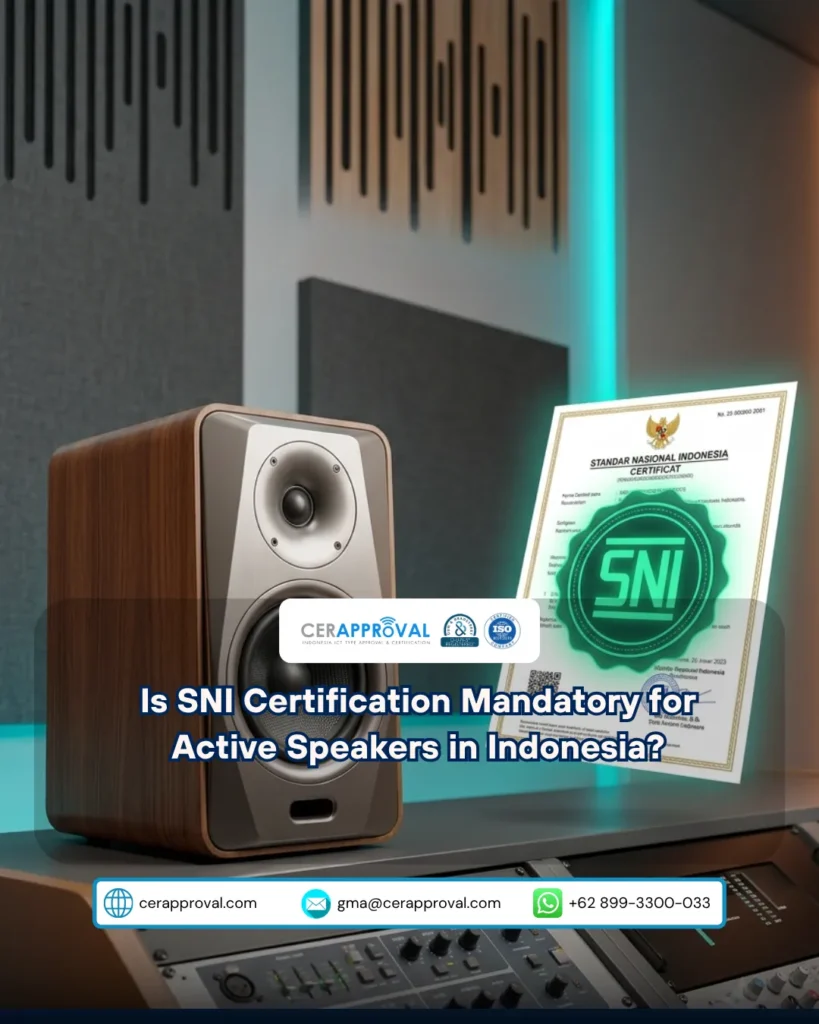
Is SNI Certification Mandatory for Active Speakers?

Is SNI Certification Mandatory for Active Speakers in Indonesia? The audio equipment market in Indonesia continues to experience strong growth, driven by demand for home entertainment systems, commercial sound setups, and personal audio devices. Among the most widely distributed audio products is the active speakerβ€”a powered loudspeaker featuring a built-in internal amplifier that connects directly to the power mains or rechargeable battery systems. Because active speakers interface directly with electrical currents, they pose potential safety risks if manufactured without strict quality standards. This leads to a critical compliance question for manufacturers and distributors: Is SNI certification mandatory for active speakers in Indonesia? SNI Regulations for Active Speakers The short answer is Yes. The Ministry of Industry of the Republic of Indonesia lists household audio-video electronics, including active speakers, under the Mandatory SNI category (referencing safety standards aligned with SNI IEC 60065 or its latest updates for audio, video, and electronic apparatus safety). This mandatory standard ensures that all active audio equipment sold in Indonesia meets strict safety criteria: Electrical Safety: Eliminating the risk of electrical shock, short circuits, internal overheating, and fire hazards. Component Reliability: Verifying that internal transformers, power supplies, and wiring insulation meet national tolerance limits. Market Standardisation: Creating a fair business environment by preventing sub-standard imported or locally built audio equipment from entering the market. Distributing active speakers in Indonesia without an official SPPT-SNI (Certificate for Using the SNI Mark) violates national consumer protection and industrial trade laws, exposing non-compliant businesses to product seizures, heavy fines, or license revocation. The Step-by-Step SNI Certification Process for Active Speakers Acquiring the SNI certificate requires a combination of quality management auditing and technical laboratory safety tests: 1. Quality Management Implementation The manufacturing facility must operate under an accredited Quality Management System (such as ISO 9001) to guarantee consistent manufacturing quality across all production batches. 2. Application Submission to LSPro The applicant submits a formal application to a KAN-accredited Product Certification Body (LSPro). The submission includes business licenses, product specification sheets, circuit diagrams, and user manuals. 3. Factory Audit and Sample Extraction Appointed auditors from the LSPro perform an on-site evaluation of the manufacturing plant (domestic or international). During the audit, official samples of the active speaker line are selected and sealed for laboratory evaluation. 4. Laboratory Safety & Performance Testing The sealed sample units undergo rigorous testing at an accredited laboratory. Tests evaluate dielectric strength, temperature limits during operation, mechanical stability, and general electrical insulation safety. 5. Evaluation and SPPT-SNI Issuance Upon successful technical evaluation of the audit report and laboratory test results, the LSPro grants the SPPT-SNI certificate. The manufacturer or importer is then legally authorized and required to print the official SNI mark on the product packaging and physical units. Simplify Your Active Speaker Certification with Cerapproval Navigating complex electrical safety frameworks and coordinating testing laboratories can be challenging for busy enterprises. Cerapproval serves as your expert regulatory partner in Indonesia, managing the entire SNI certification process for your active speaker products seamlessly from start to finish. Contact Cerapproval today for a free consultation and start your certification process! Get a free consultation for your certification. Download the complete guide to the KOMDIGI certification process. Schedule a meeting with the Cerapproval expert team today! Contact Us Today: 🌐 www.cerapproval.com πŸ“§ gma@cerapproval.com πŸ“± WhatsApp: +62 899‑3300‑033

SNI

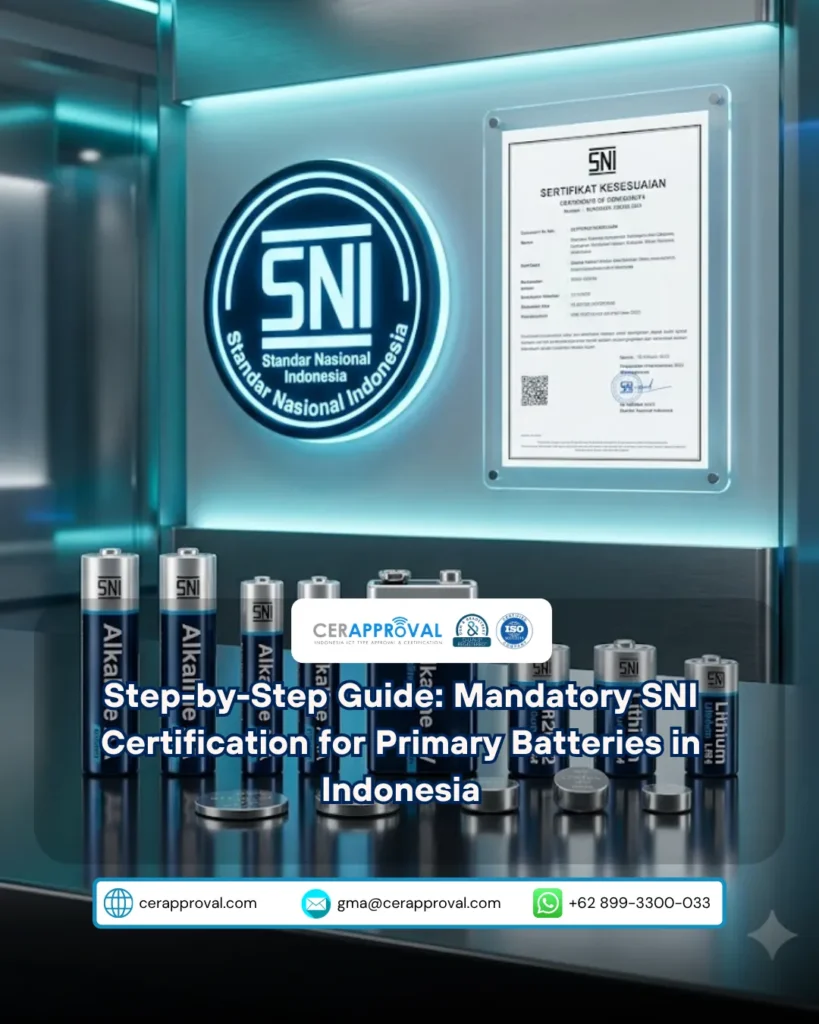
Step-by-Step Guide: Mandatory SNI Certification for Primary Batteries in Indonesia

Step-by-Step Guide: Mandatory SNI Certification for Primary Batteries in Indonesia Primary batteries (non-rechargeable batteries such as AA, AAA, C, D, and button cells) are ubiquitous power sources utilized across millions of consumer electronics, toys, remote controls, and medical tools. Because of their high consumption rate and heavy reliance in everyday life, ensuring battery safety and quality is a top priority for Indonesian regulators. To safeguard consumers from hazardous sub-standard products, the Indonesian government mandates that all primary batteries distributed or imported into the country must obtain the Indonesian National Standard (SNI) certification. The Critical Importance of Mandatory SNI for Primary Batteries Chemical compounds inside primary batteries pose inherent risks if manufactured without strict quality controls. Electrolyte leakage, thermal runaway, and heavy metal contamination are significant hazards that national standards aim to prevent. Under the relevant national standards (aligned with the SNI IEC 60086 series), SNI certification verifies that: Electrical & Physical Safety: The battery is engineered to resist short circuits, high temperatures, shock, and leakage during usage or storage. Environmental Compliance: Toxic chemical content, particularly Mercury (Hg) and Cadmium (Cd), remains strictly within legally permissible limits. Performance Integrity: The nominal voltage and discharge performance accurately match the technical specifications listed on the packaging. Distributing or selling primary batteries without a valid SPPT-SNI (Certificate for Using the SNI Mark) constitutes a violation of Indonesian trade laws, leading to product recalls, heavy fines, or customs blockage. The SNI Certification Process for Primary Batteries Achieving SNI compliance involves a rigorous evaluation mechanism carried out by an accredited Product Certification Body (LSPro). Below is the core workflow: 1. Application Submission & Gap Analysis The applicant (local manufacturer or authorized local representative for overseas principal) submits corporate legal permits along with technical dossiers, including battery chemistry specs, production flowcharts, and ISO 9001 certifications. 2. On-Site Manufacturing Audit Auditors from an accredited LSPro visit the manufacturing plant (domestic or international) to conduct an evaluation of the Quality Management System, factory quality control procedures, and raw material handling. 3. Sample Extraction and Laboratory Testing During the plant audit, official auditors seal random samples of primary batteries. These samples are shipped to an accredited testing laboratory to undergo stringent tests, including discharge testing, leakage resistance, climate exposure, and chemical analysis. 4. Panel Review & Certificate Issuance The technical committee reviews the audit report and laboratory test results. Upon full compliance with the primary battery SNI standard, the LSPro issues the official SPPT-SNI certificate. The manufacturer must then affix the official SNI mark and registration details onto the battery units or retail packaging. Streamline Your Battery Certification with Cerapproval Navigating complex technical standards, laboratory coordination, and regulatory compliance can be demanding for both local distributors and foreign manufacturers. Cerapproval acts as your dedicated compliance partner in Indonesia, facilitating the entire SNI certification process for your primary battery products efficiently from start to finish. Contact Cerapproval today for a free consultation and start your certification process! Get a free consultation for your certification. Download the complete guide to the KOMDIGI certification process. Schedule a meeting with the Cerapproval expert team today! Contact Us Today: 🌐 www.cerapproval.com πŸ“§ gma@cerapproval.com πŸ“± WhatsApp: +62 899‑3300‑033

SNI

How Does SNI Certification for Automotive Head Units Work?

The automotive industry has evolved significantly over the past decade, and one of the most noticeable advancements is the development of the automotive head unit. What was once a simple car radio has become an advanced infotainment system that integrates navigation, multimedia, Bluetooth connectivity, Apple CarPlay, Android Auto, GPS, rear-view cameras, and vehicle communication features. As automotive electronics become increasingly sophisticated, ensuring product safety, quality, and regulatory compliance has become essential. In Indonesia, one of the most recognized quality benchmarks is the Standar Nasional Indonesia (SNI) certification. Understanding the SNI certification process is important for manufacturers, importers, and distributors seeking to market automotive electronic products in Indonesia. What Is SNI Certification? SNI (Indonesian National Standard) is the national standard established by the National Standardization Agency of Indonesia (BSN). SNI certification demonstrates that a product complies with applicable quality, safety, and performance requirements. While not every automotive head unit is currently subject to mandatory SNI certification, compliance with relevant Indonesian standards and adopted international standards significantly enhances product credibility and market acceptance. Why Is SNI Certification Important for Head Units? Automotive head units are integrated with a vehicle’s electrical system. Products that fail to meet technical requirements may create serious risks, including: Certification minimizes these risks by verifying that products have undergone professional testing and technical evaluation. Certification Requirements Applicants generally need to prepare documentation including: These documents allow certification bodies to evaluate product compliance efficiently. SNI Certification Process Initial Consultation The certification journey begins by identifying applicable standards and determining certification requirements. Application Submission Manufacturers or importers submit technical documentation and administrative requirements. Laboratory Testing Samples are tested by accredited laboratories to evaluate: Factory Assessment Depending on the certification scheme, auditors may assess the manufacturing facility’s quality management system. Technical Evaluation Certification experts review laboratory reports, audit findings, and supporting documentation. Certificate Issuance If all technical and administrative requirements are successfully fulfilled, the SNI certificate is issued according to applicable regulations. Benefits of SNI Certification Obtaining SNI certification provides numerous business advantages: Certified products often gain stronger acceptance among distributors, retailers, and consumers. Common Challenges Manufacturers frequently encounter challenges such as: Working with experienced certification consultants can significantly simplify the process. How Cerapproval Supports Your Certification Journey Cerapproval provides comprehensive certification consulting services for manufacturers and importers of automotive electronic products. Our services include identifying applicable standards, preparing technical documentation, coordinating laboratory testing, communicating with certification bodies, and guiding clients throughout the certification process. Our experienced team helps businesses achieve compliance efficiently while minimizing delays and administrative burdens. Conclusion SNI certification plays a critical role in ensuring the safety, quality, and regulatory compliance of automotive head units in Indonesia. Beyond meeting technical requirements, certification strengthens customer trust, improves product competitiveness, and supports long-term business growth. By partnering with Cerapproval, companies can navigate the certification process confidently and efficiently. Want your device certified quickly and accurately? Contact Cerapproval today for a free consultation and start your certification process! Contact Us Today:🌐 www.snicertification.comπŸ“§ sni@cerapproval.co.idπŸ“± WhatsApp: +62 857-7042-1713

Flag Counter