
#SNICertification

SNI

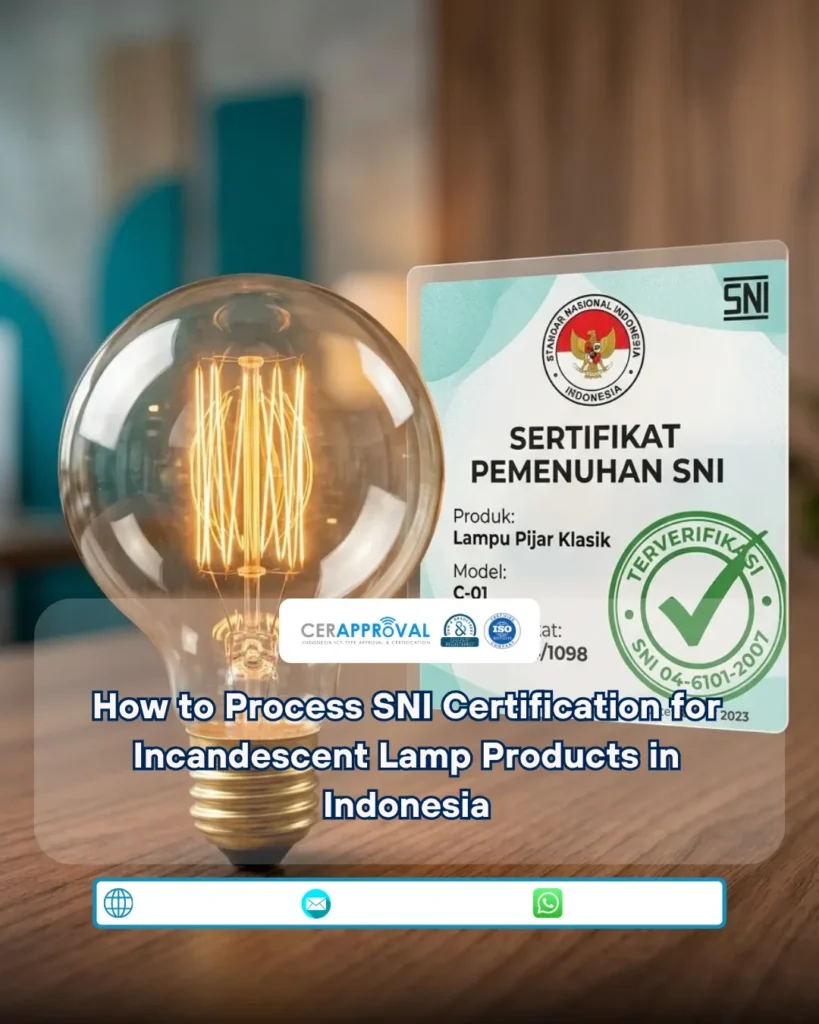
How to Process SNI Certification for Incandescent Lamp Products in Indonesia

Mandatory SNI Certification for Incandescent Lamps in Indonesia Modern manufacturers must secure official SNI certification for incandescent lamps before importing or distributing lighting products in Indonesia. In particular, these bulbs connect directly to main power lines and generate substantial heat. Consequently, sub-standard products pose serious fire hazards, glass shatter risks, and electrical short circuits. To safeguard consumers, the Indonesian government enforces strict compliance regulations. Therefore, understanding the process for SNI certification for incandescent lamps is essential for domestic manufacturers and foreign exporters to achieve lawful distribution. Why You Need SNI Certification for Incandescent Lamps Compliance ensures that lighting equipment meets strict national safety and mechanical performance benchmarks. Specifically, key evaluation parameters for testing include: Electrical Safety: Assesses insulation resistance, dielectric strength, and contact point protection to prevent electrical shocks. Thermal and Mechanical Endurance: Evaluates glass bulb and lamp cap strength under high temperatures to prevent detachment or bursting. Photometric & Power Performance: Verifies that nominal power consumption and lumen output accurately match label specifications. As a result, distributing non-compliant lighting equipment without a valid SPPT-SNI Certificate leads to severe customs detentions, product recalls, and legal penalties. Step-by-Step Workflow for SNI Certification for Incandescent Lamps Official certification operates under the Type 5 Scheme. This means the procedure requires both a factory quality system audit and comprehensive product sample testing through a structured process: Document Preparation: First, the applicant gathers corporate legal permits (NIB, NPWP) alongside the manufacturer’s quality management documentation (ISO 9001). Application Submission: Next, submit a formal application to an accredited Product Certification Body (LSPro) recognized by KAN. Factory Audit Phase: Afterward, LSPro auditors inspect the manufacturing facility to evaluate production processes and quality controls. Sample Testing: Furthermore, an authorized sampling officer extracts representative samples for rigorous evaluation at a KAN-accredited testing laboratory. Certificate Granting: Upon successful verification of audit reports and test results, LSPro grants the official SPPT-SNI Certificate. Mandatory Product Marking: Finally, the manufacturer must permanently affix the official SNI mark and certificate number onto retail packaging and the lamp body. Key Technical Documents Needed for Audit Approval To prevent unnecessary delays during the factory audit phase, applicants should organize all required paperwork in advance. In addition, you must prepare: Valid ISO 9001 Certificate covering the specific lamp manufacturing plant. Factory layout diagrams and complete raw material inspection procedures. Calibration certificates for all laboratory testing equipment on the assembly line. Official Power of Attorney (PoA) for authorized local representatives in Indonesia. Streamline Your Compliance with Cerapproval Navigating factory quality audits, laboratory safety testing, and government portals requires specialized regulatory expertise. However, Cerapproval provides end-to-end certification management to help you secure official approval swiftly in Indonesia. Furthermore, explore our detailed guides on Mandatory SNI Certification Services and SDPPI certification for smart massage chairs. Additionally, check our SDPPI certification for gateway devices and TKDN Local Content Requirements to streamline your imports. Get Started with Cerapproval Today Contact Cerapproval today for a free consultation and start your compliance process! Reach out to us to schedule a free certification consultation. Download the complete guide to the regulatory framework. Schedule a meeting with the Cerapproval expert team today! Contact Us Today: 🌐 Website: www.cerapproval.com 📧 Email: gma@cerapproval.com 📱 WhatsApp: +62 899-3300-033
SNI

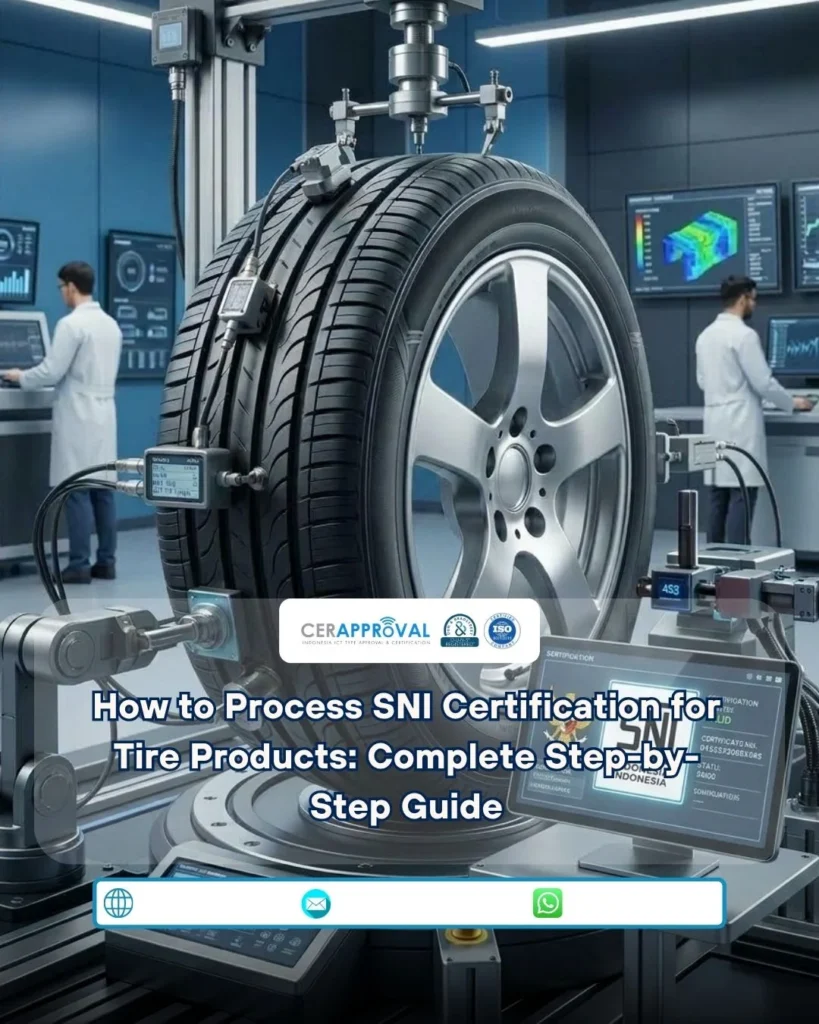
How to Process SNI Certification for Tire Products

Vehicle tires are among the most critical safety components on any motor vehicle. Because tire failures directly impact road safety and human lives, the Indonesian Government strictly mandates that all tires manufactured locally or imported into the country must obtain mandatory SNI (Standar Nasional Indonesia) certification. For automotive manufacturers, international sellers, and local importers, selling uncertified tires in Indonesia can result in severe customs detentions, product recalls, and legal penalties. Mandatory SNI Certification for Tire Products in Indonesia The Indonesian Ministry of Industry classifies mandatory SNI standards according to the vehicle application: SNI 0098: Passenger Car Tires SNI 0099: Light Truck Tires SNI 0100: Truck and Bus Tires SNI 0101: Motorcycle Tires SNI 6700: Inner Tubes for Motor Vehicle Tires Step-by-Step Guide: How to Process Mandatory SNI Certification for Tires Securing a Product Certificate for the Use of the SNI Mark (SPPT SNI) for tire products involves rigorous administrative checks, factory audits, and specialized laboratory testing. 1.Document and Technical Dossier Preparation: First, applicants must compile legal and technical documentation. Consequently, you will need to prepare your Business Identification Number (NIB), local business licenses, and the manufacturer’s ISO 9001 Quality Management System certificate. Additionally, include an Official Letter of Appointment from the overseas factory if applying via a local importer, alongside comprehensive technical datasheets covering tire sizes, load index, speed symbols, and tread pattern designs. 2.Submission to Accredited LSPro: Next, submit the application dossier to a Product Certification Body (LSPro). However, ensure that the body is accredited by KAN (National Accreditation Committee) and authorized by the Ministry of Industry. 3.On-Site Factory Audit: Afterward, qualified auditors from the LSPro conduct an on-site audit of the manufacturing facility, whether located domestically or abroad. As a result, they verify raw rubber quality controls, manufacturing processes, and overall quality assurance systems. 4.Sample Collection and Laboratory Testing: During the audit, auditors select and seal representative tire samples, which are then dispatched to an accredited testing laboratory in Indonesia. Furthermore, laboratory testing evaluates four key areas: Endurance Testing: Running the tire on high-speed testing drums under loaded conditions. High-Speed Performance Testing: Evaluating structural integrity at elevated speed ratings over specified intervals. Plunger Energy / Penetration Testing: Testing resistance against sharp object impacts and punctures. Dimensional and Bead Inspection: Verifying rim fitment precision, tread wear indicators, and physical measurements. 5.SPPT SNI Certificate Issuance: Once both the factory audit report and laboratory test reports satisfy all SNI parameters, the LSPro issues the official SPPT SNI Certificate. 6.NPB Registration and Mandatory Sidewall Marking: Finally, after receiving the SPPT SNI, the applicant registers for a Product Registration Number (NPB) with the Ministry of Trade. Therefore, the official SNI logo must be permanently embossed on the tire sidewall prior to commercial distribution. Streamline Your Regulatory Compliance with Cerapproval Navigating local testing rules and government filings requires expert guidance. Fortunately, end-to-end type approval services are offered by Cerapproval. Fast, compliant, and hassle-free market entry is achieved for your devices. Need assistance securing POSTEL / DJID certification for your products? Smooth market entry can be guaranteed for your wireless electronics! Partner with Cerapproval today for expert type approval services. Contact Cerapproval today for a free consultation and start your certification process! Get a free consultation for your certification. Download the complete guide to the KOMDIGI certification process. Schedule a meeting with the Cerapproval expert team today! Contact Us Today: 🌐 www.cerapproval.com 📧 gma@cerapproval.com 📱 WhatsApp: +62 899‑3300‑033

SNI

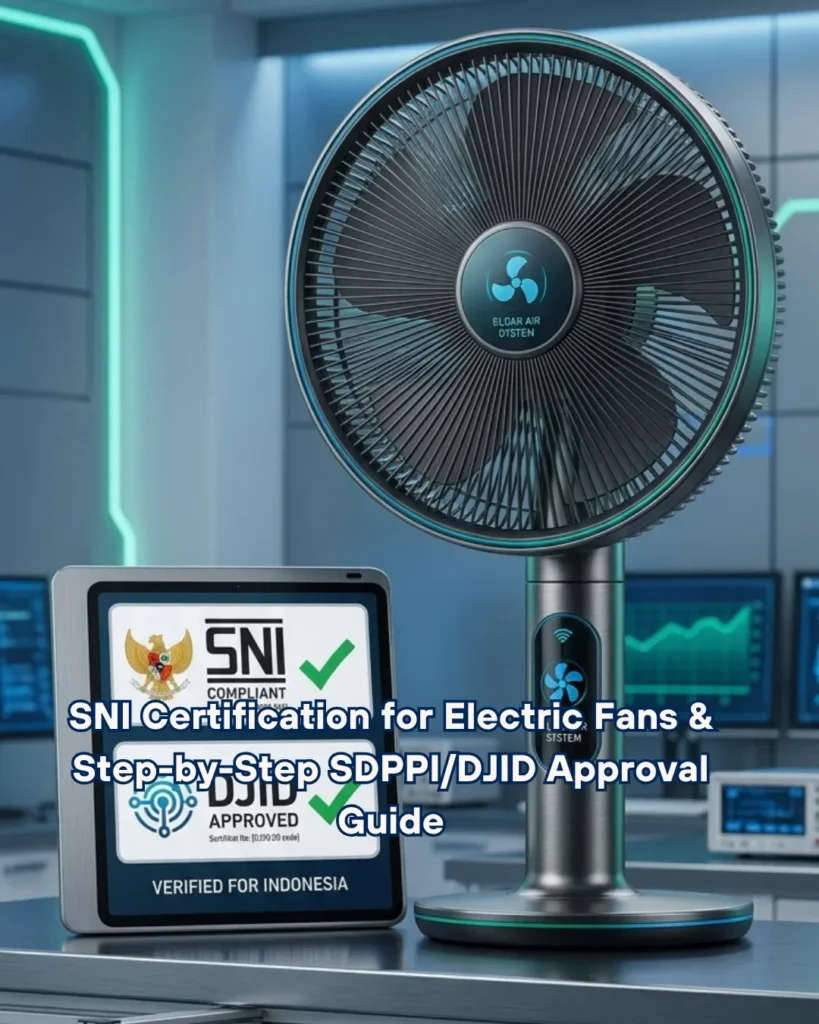
SNI Certification for Electric Fans & Step-by-Step SDPPI/DJID Approval Guide

SNI certification for electric fans is mandatory for makers and importers entering the Indonesian market. Furthermore, selling home appliances in Indonesia offers big business opportunities. However, companies must follow clear safety and trade rules. First, basic cooling fans must meet mandatory Standar Nasional Indonesia (SNI) rules. In addition, smart models with Wi-Fi or Bluetooth need Directorate General of Digital Infrastructure (DJID/SDPPI) approval. 1. Mandatory SNI Certification for Electric Fans Basically, the Ministry of Industry sets safety rules for home devices. Therefore, SNI certification for electric fans protects users from electric shocks, broken parts, and fire risks. Key Safety Standards SNI IEC 60335-2-80 / SNI 7609: Safety rules for table, wall, stand, ceiling, and duct fans. SNI 7859 / SNI IEC 60335-1: General electric safety rules for home appliances. SNI IEC 60879: Energy efficiency standards and official SKEM labels. Step-by-Step SNI Process First, send your application to an accredited Product Certification Body (LSPro). Next, auditors inspect your factory Quality Management System (ISO 9001). Then, lab experts test sample units for safety and durability. Finally, get your SPPT SNI certificate and register a Product Number (NPB) with the Ministry of Trade. 2. How to Get SDPPI / DJID Approval for Smart Fans For example, if your fan uses Wi-Fi, Bluetooth, or remotes, it acts as a radio device. For this reason, you must get DJID Type Approval along with your SNI certification for electric fans. Step-by-Step SDPPI / DJID Process First, collect tech specs, RF charts, ISO 9001 papers, and local business IDs (NIB). Next, run tests at an approved Indonesian lab or send valid test reports. After that, upload all lab reports and legal forms to the official DJID web portal. Subsequently, pay the non-tax fee (PNBP) right after you get your SP2 bill. Finally, download your official certificate and print the DJID logo and QR code on product boxes. Streamline Compliance with Cerapproval Indeed, handling dual approvals can feel hard and slow. However, Cerapproval offers simple end-to-end help. As a result, we manage lab tests, factory checks, and government filings for top brands. Specifically, do you need fast help with your SNI certification for electric fans or SDPPI approval? Contact Cerapproval today for a free advice session to start your market entry! Website: www.cerapproval.com Email: gma@cerapproval.com WhatsApp: +62 899-3300-033

Flag Counter